HEALING FINDINGS BEFORE THE MIXTURE
What is KLOW peptide? What mixing the ingredients has yet to prove
Researchers measured bowel damage and injury repair with individual ingredients. You can understand their findings while keeping the full mixture’s untested effects in view.
The short answer before judging a healing claim
Bowel damage and injury repair improved in tests of individual ingredients. Those experiments mostly involved animals or cells grown outside the body.
KLOW peptide combines KPV, GHK-Cu, BPC-157, and TB-500 in one liquid. The ingredients dissolve into one liquid without turning into a new substance.
The usual vial contains 80 mg of powder, including GHK-Cu 50 mg and BPC-157 10 mg. The other listed weights are TB-500 10 mg and KPV 10 mg.
Milligrams measure how much powder the vial contains. That total doesn't establish a treatment amount for your injury.
FDA hasn't approved KLOW as a treatment, drug, or supplement. No experiment has compared the full mixture with another treatment in animals or people.
Claims of combined healing rely on tests of individual ingredients. Those tests can't establish what happens when you receive the mixture.
People posting about their own use most often mention repair and less inflammation. They sometimes credit KPV for extra relief compared with mixtures that leave KPV out.
Those are personal accounts without a trial checking the reported changes. KLOW effects explains the relief reports and safety questions that remain for you.
How KLOW changes the ingredient list of other mixtures
KLOW contains KPV, GHK-Cu, BPC-157, and TB-500 in one research vial. The other mixture names refer to different ingredient lists.
WOLVERINE pairs BPC-157 with TB-500. GLOW adds GHK-Cu to that pair, while KLOW adds KPV as well.
The K at the start of KLOW refers to the added KPV. You can compare those contents, but no mixture name establishes a proven medicine.
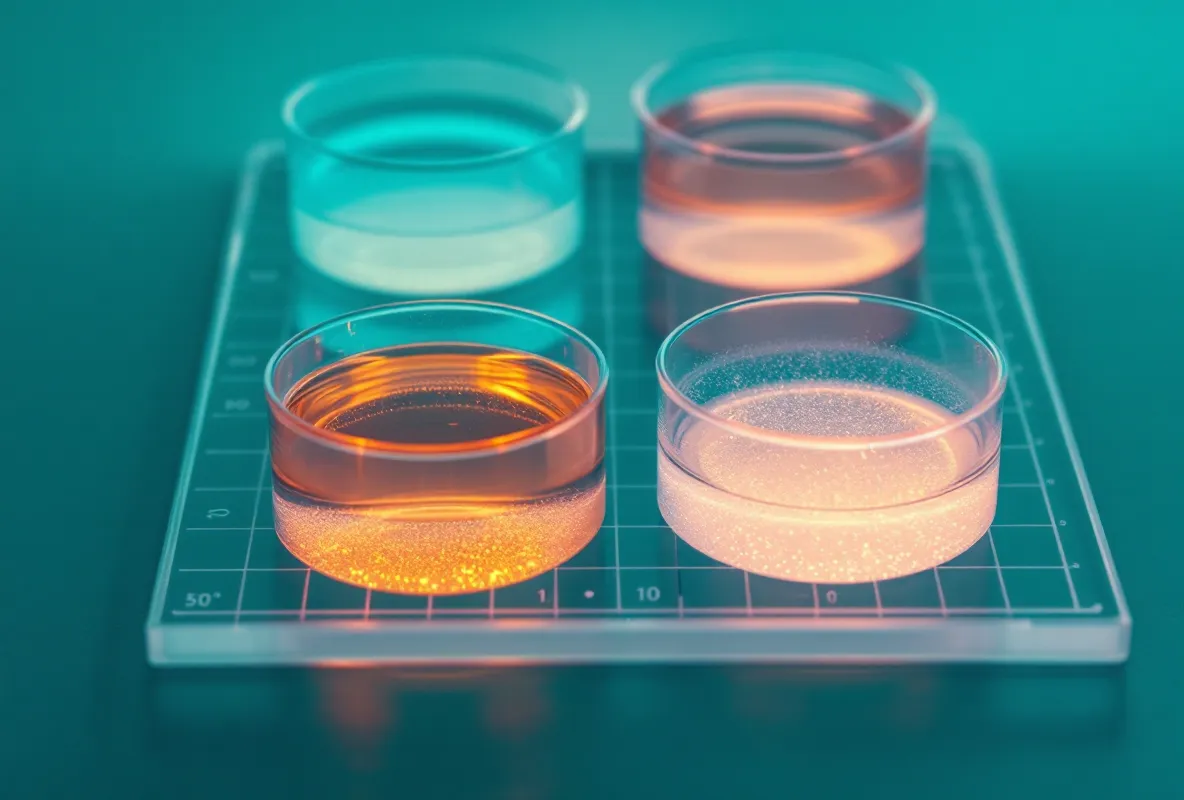
Which ingredient produced which measured repair result
KPV reduced bowel damage and inflammation in mice. In lab tests, KPV reduced the release of inflammation-causing substances from bowel cells and from immune cells [3].
The ingredient comes from the end of a natural hormone. A protein in inflamed bowel cells helps carry KPV from surrounding liquid inside.
Delivering KPV to inflamed bowel cells helps explain the interest in bowel treatment, but your question about relief after receiving the full mixture still needs evidence from a mixture trial. Separate results don't answer that question.
GHK-Cu increased collagen production and changed use of repair instructions in DNA. The cell changes also concerned protection from damage and DNA repair [4][5].
Collagen is a protein that gives skin and other tissues strength. GHK-Cu brings copper used to join collagen strands and gives the mixture its blue-green shade.
The ingredient occurs naturally in blood fluid, with levels falling as people age. An age-related fall doesn't establish that extra GHK-Cu helps your health.
BPC-157 helped repair a rat Achilles tendon after a complete cut. After daily belly shots, the rats' healing tendons gained strength and their movement improved [2].
The ingredient has a 15-amino-acid chain, meaning linked protein parts, from a stomach-fluid protein. Lab work also links the ingredient with newly grown blood vessels.
A 2025 vein-drip safety test gave two adults up to 20 mg without reported harmful effects [6]. Two volunteers can't establish general safety, and the test didn't measure tendon repair.
Full thymosin beta-4 increased new skin coverage over rat wounds. The result concerns the longer protein, rather than its short lab-made TB-500 piece.
New skin coverage improved by 42% at 4 days and 61% at 7 days [1]. Those rat results don't establish when your own wound would heal.
TB-500 falls under WADA's sports drug ban, which includes thymosin beta-4. Calling TB-500 use research doesn't change the rules for a tested athlete.
KLOW blend: which combined effects still need measuring
Rat tendons and wounds improved in separate ingredient experiments. BPC-157 helped tendons, while thymosin beta-4 helped wounds grow new skin.
KPV eased bowel inflammation in animals and cells. GHK-Cu changed cells' use of DNA instructions involved in repair.
The complete mixture lacks a fair comparison in cells, animals, or people. You can't use the separate findings to establish its healing benefit or risk of harm.
The usual 80 mg total measures powder inside a research vial. That weight isn't an approved treatment amount or a measure of your chance of improvement.
Scientists have reasons to investigate combined effects on tissue repair. A useful research question doesn't establish the result of an experiment that hasn't happened.
KLOW research explains what the ingredient experiments measured and what improved. KLOW references links the papers so you can check the findings.
Klow peptide buy searches: what your health questions need
You can read about healing evidence here, without an order service. Rx KLOW doesn't sell compounds or arrange a purchase from another supplier.
The writers aren't your treating clinicians, and the name doesn't establish a pharmacy. These pages explain research, rather than provide a prescription for your injury.
The about page explains the writers' role and the evidence's limits. Your treating clinician needs both an examination and your health history for personal care.